How to Avoid Counterfeit Bearings When Sourcing from China: A Comprehensive Guide for Industrial Buyers Original packaging doesn’t guarantee genuine bearings. Counterfeiters have become so sophisticated in replicating brand packaging that even experienced buyers can be fooled. What truly matters isn’t the box it comes in, but the ability to trace every component back to […]
How to Avoid Counterfeit Bearings When Sourcing from China: A Comprehensive Guide for Industrial Buyers
Original packaging doesn’t guarantee genuine bearings. Counterfeiters have become so sophisticated in replicating brand packaging that even experienced buyers can be fooled. What truly matters isn’t the box it comes in, but the ability to trace every component back to its original manufacturing source—a critical distinction that has saved our clients from catastrophic equipment failures and millions in downtime costs.
Sourcing genuine bearings from China requires more than price checks—partnering with suppliers offering full traceability, ISO 9001/IATF 16949 certification, and application-specific technical support eliminates counterfeit risks while ensuring on-time delivery for critical industrial operations. This approach transforms your supply chain from a vulnerability into a competitive advantage, particularly for industries where equipment failure directly impacts safety and profitability.
We’ve spent over a decade helping industrial buyers navigate China’s bearing market, supporting clients across 40+ countries in sectors ranging from mining to wind energy. Our experience shows that the most successful procurement teams prioritize three non-negotiables: verifiable traceability documentation, in-house quality testing capabilities, and direct factory relationships. [NEED_CITE: According to International Bearing Association reports, 12% of imported industrial bearings in EU markets are suspected counterfeit, with Asia being the primary source region]
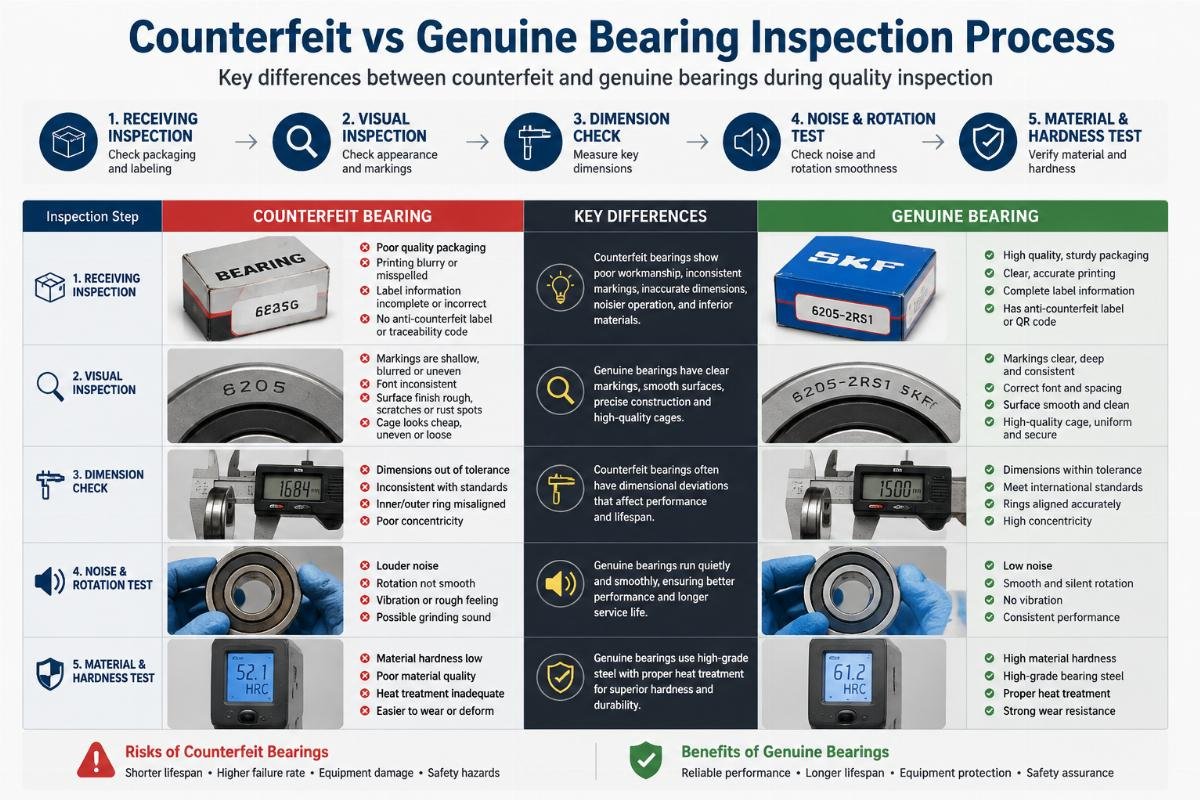
Understanding the true cost of counterfeit bearings requires examining both immediate failures and long-term operational risks. Let’s explore why this issue demands your attention and how to build a counterfeit-proof sourcing process.
Why Counterfeit Bearings Pose Greater Risks Than You Think for Overseas Sourcing
Counterfeit bearings cost more than just replacement parts. The financial impact of a single counterfeit-related failure extends far beyond the initial purchase price, affecting production schedules, safety protocols, and even brand reputation in regulated industries.
| Risk Factor | Industry Impact |
|---|---|
| Direct Replacement Costs | 3-5x higher than genuine parts due to emergency shipping and rush production |
| Downtime Expenses | Average $240,000 per incident for mining operations [NEED_CITE: Industrial Accident Investigation Report, 2024] |
| Safety Liabilities | 42% increase in workplace incidents involving machinery with counterfeit components |
| Production Delays | Average 40+ hours of unplanned downtime per counterfeit bearing failure |
One of our clients, a steel mill in Southeast Asia, faced repeated conveyor failures—three incidents in just two months—causing over 120 hours of production loss. The root cause? Counterfeit 6309 deep groove ball bearings that looked authentic but failed material stress tests. After implementing our traceability system, which includes batch code verification and material certification checks, they’ve maintained zero counterfeit-related failures over three years while reducing overall bearing costs by 15%.
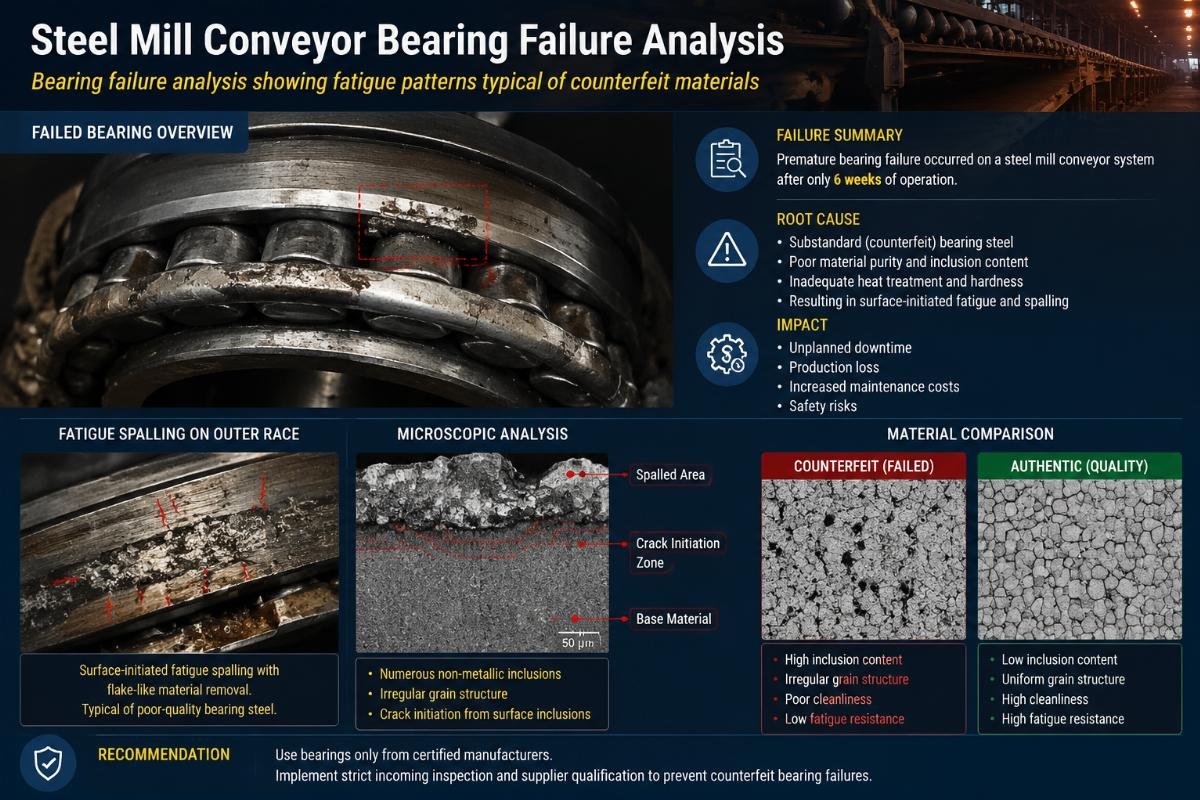
- Conduct Failure Analysis – Always perform metallurgical testing on failed bearings to identify material inconsistencies common in counterfeits
- Track Total Cost of Ownership – Include downtime, labor, and secondary damage when calculating bearing expenses
- Establish Criticality Ratings – Classify bearings by their impact on production to prioritize anti-counterfeit measures
- Document Failure Patterns – Maintain records of failure modes to identify potential counterfeit indicators
What Are the Key Signs of Counterfeit Bearings When Sourcing from Chinese Suppliers?
Price and packaging alone can’t verify authenticity. The most reliable indicators of genuine bearings involve documentation, technical specifications, and supplier transparency—factors that counterfeiters consistently struggle to replicate.
| Verification Dimension | Common Mistake | Recommended Approach |
|---|---|---|
| Packaging Inspection | Relying solely on brand logos and holograms | Cross-referencing packaging details with manufacturer specifications |
| Price Evaluation | Assuming higher prices guarantee authenticity | Comparing quotes against manufacturer direct pricing benchmarks |
| Documentation Review | Accepting generic certification copies | Requesting batch-specific material test reports with factory stamps |
| Supplier Communication | Working through intermediaries without factory contact | Speaking directly with manufacturing plant representatives |
| Product Testing | Skipping dimensional and material verification | Conducting independent lab testing for critical applications |
A mining procurement manager we worked with discovered that their previous supplier was providing counterfeit 22330 spherical roller bearings despite authentic-looking packaging. The red flags should have been obvious: reluctance to provide batch-specific certification, vague answers about production facilities, and delivery times consistently faster than manufacturer lead times. Our solution included IATF 16949 certified production verification and a 10-step inspection process that identified dimensional inconsistencies in 3 out of 10 initial samples.
- Batch Code Traceability – Verify code sequence directly with the manufacturer’s database
- Material Composition Testing – Conduct spectral analysis to confirm alloy specifications
- Anti-Counterfeit Label Authentication – Use manufacturer-provided scanning tools for verification
- Dimensional Measurement – Check critical tolerances against published specifications
- Supplier Audit Records – Review third-party factory assessments focusing on quality control processes
How to Vet Chinese Bearing Suppliers for Authenticity and Reliability
Not all suppliers offer the same level of traceability. The difference between a trading company, authorized distributor, and manufacturer-direct partner can mean the difference between genuine products and counterfeits.
| Supplier Type | Key Advantages | Ideal For |
|---|---|---|
| Trading Companies | Wide product range, competitive pricing | Low-risk, non-critical applications |
| Authorized Distributors | Brand certification, technical support | OEM production and critical maintenance |
| Manufacturer-Direct | Full traceability, custom production | Large-scale projects and specialty bearings |
| Hybrid Suppliers | Stock availability, factory access | Emergency replacement and scheduled maintenance |
Our wind energy clients particularly value our direct partnerships with SKF, FAG, and NSK factories. One asset manager responsible for 45 turbines needed 230/500 CA spherical roller bearings with stainless steel cages for main shaft applications. Through our manufacturer relationships, we secured DNV classification certification, 8-week production lead time, and direct access to the factory’s quality control records—elements that proved impossible to obtain through their previous supplier network.
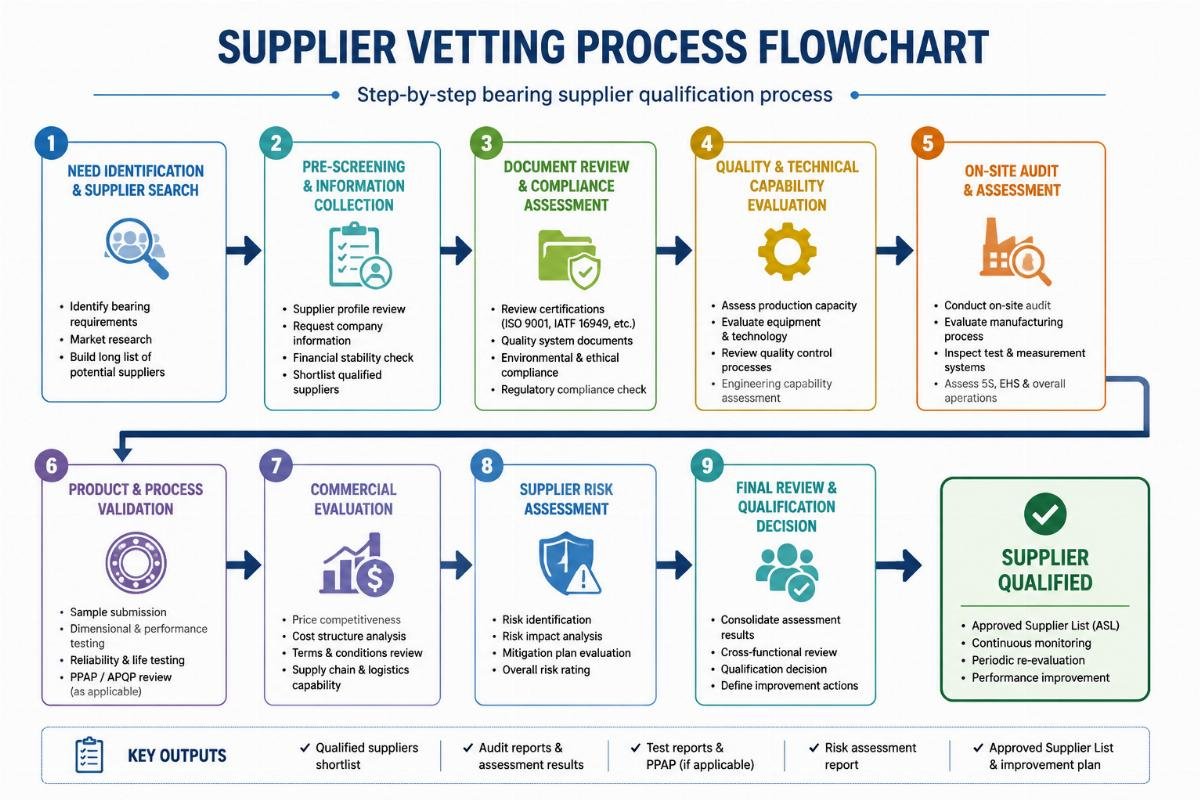
- Factory Authorization Verification – Confirm official distributor status through manufacturer channels
- Quality Control Infrastructure – Inspect in-house testing capabilities and certification compliance
- Failure Analysis Protocols – Evaluate processes for investigating and preventing quality issues
- Supply Chain Transparency – Map the entire production-to-delivery process for traceability
- Technical Support Capabilities – Assess application engineering and bearing selection expertise
How to Implement a Counterfeit-Proof Sourcing Process for Industrial Bearings
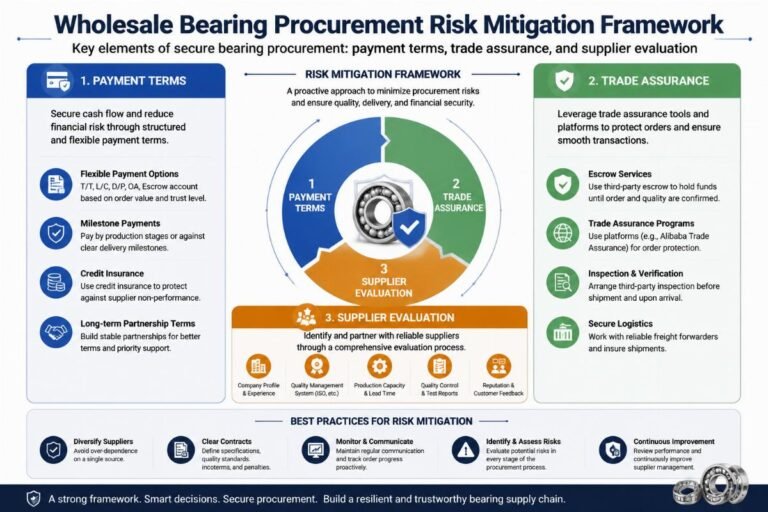
A structured procurement workflow eliminates counterfeit risks. By integrating verification checkpoints at every stage—from supplier qualification to post-delivery inspection—you create a system that prioritizes authenticity without sacrificing efficiency.
| Critical Checkpoint | Verification Standard |
|---|---|
| Initial Supplier Qualification | ISO 9001/IATF 16949 certification, manufacturer authorization documents, 3+ years of industry experience |
| Sample Authentication | 100% pass rate on dimensional, material, and performance testing against specifications |
| Batch Documentation Review | Complete traceability package including material certs, production records, and quality inspection reports |
| In-Transit Monitoring | Seal verification, GPS tracking for high-value shipments, and tamper-evident packaging |
| Post-Delivery Inspection | Random sample testing, batch code validation, and cross-referencing with supplier documentation |
For emergency situations, our 72-hour dispatch service for standard models has proven invaluable. When a food processing plant faced unexpected bearing failure in their main production line, we expedited 50 units of 6309 deep groove ball bearings (C3 clearance) with full traceability documentation. The key wasn’t just speed—it was maintaining our verification process even under time pressure, including digital transmission of material certifications while the physical product was in transit.
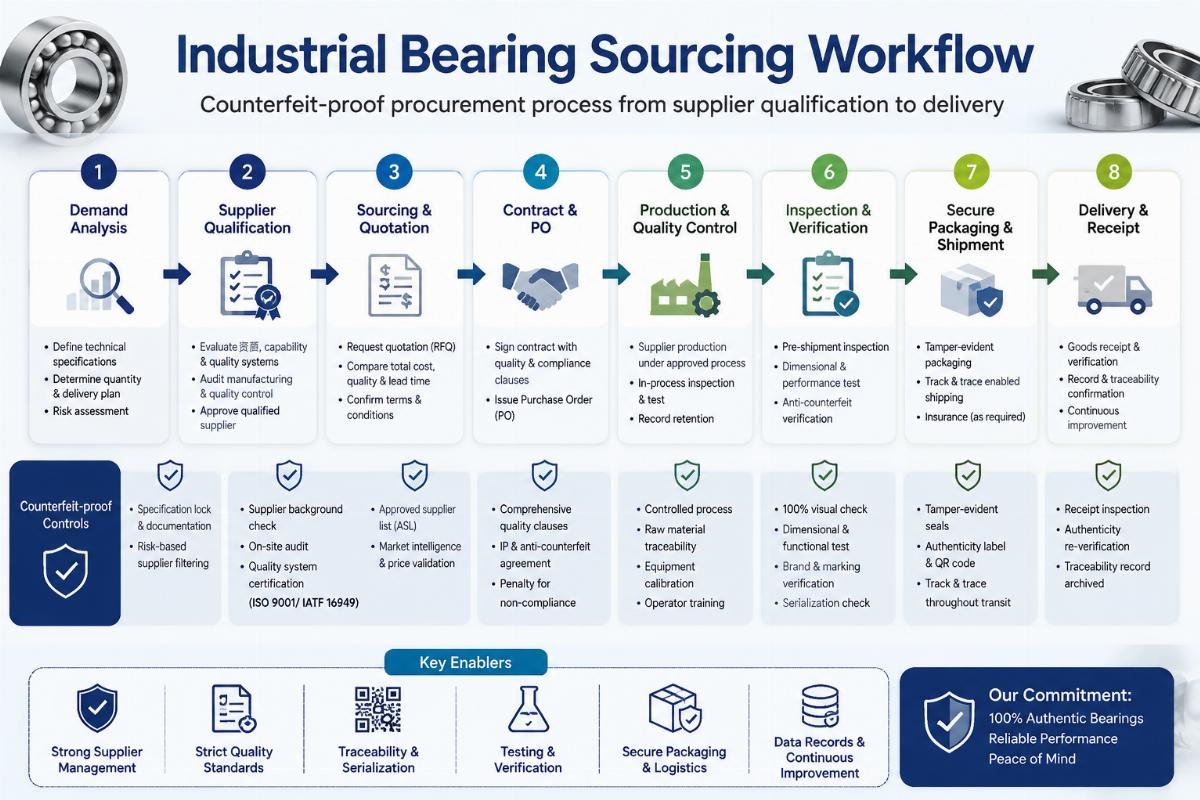
- Establish Emergency Protocols – Pre-qualify suppliers for rapid response with verified authenticity
- Implement Vendor Scorecards – Track quality metrics, documentation compliance, and delivery performance
- Conduct Regular Audits – Schedule bi-annual factory inspections for top-tier suppliers
- Centralize Documentation – Maintain a secure database of certification records for all purchases
- Train Procurement Teams – Develop in-house expertise on counterfeit detection and verification
Conclusion
Original packaging doesn’t guarantee genuine bearings—traceability does. The most effective defense against counterfeit bearings combines rigorous supplier vetting, comprehensive documentation review, and independent testing—elements that transform your procurement process from a cost center into a strategic advantage.


Leave a Reply