Rolamentos importados x rolamentos chineses: como compradores globais conseguem uma economia de 30 a 40% no custo total de propriedade (TCO) sem comprometer a qualidade Chinese bearings aren’t just cheaper—they’re rewriting the rules of industrial reliability. For decades, global buyers automatically defaulted to imported brands assuming inherent superiority, but today’s ISO 9001/IATF 16949 certified Chinese […]
Rolamentos importados x rolamentos chineses: como compradores globais conseguem uma economia de 30 a 40% no custo total de propriedade (TCO) sem comprometer a qualidade
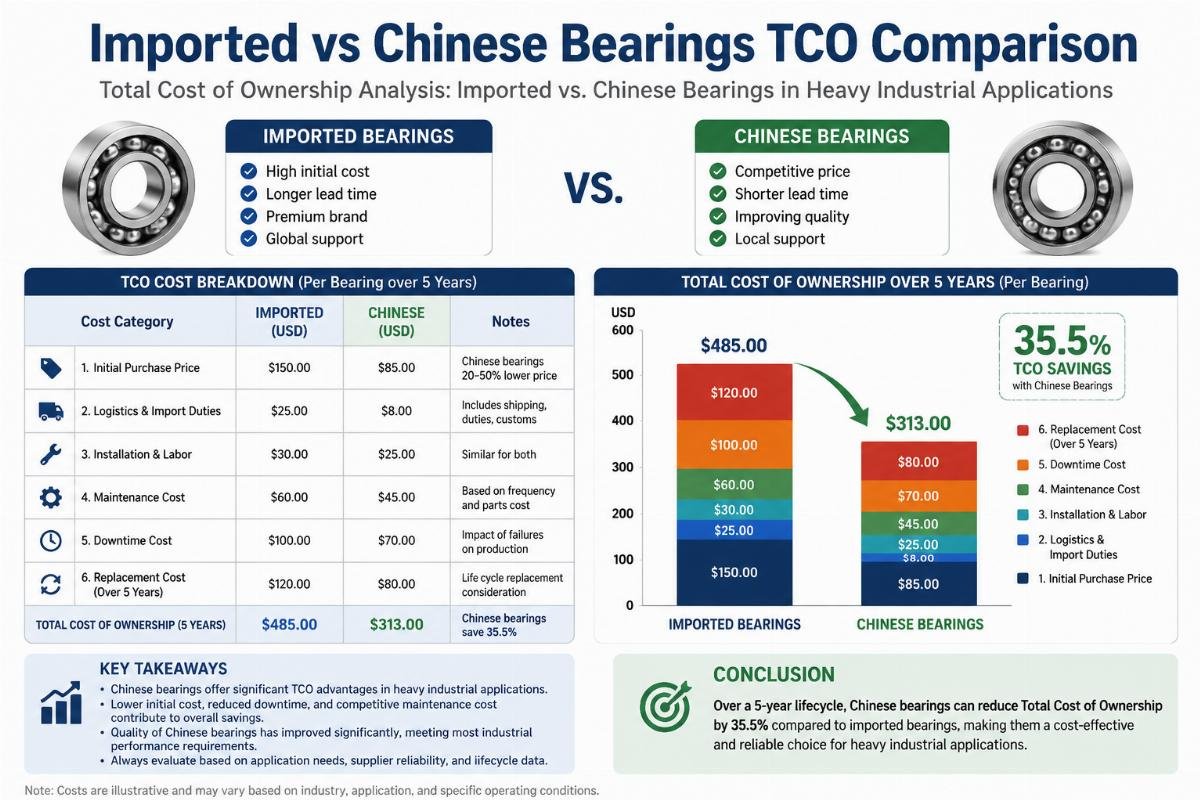
Chinese bearings aren’t just cheaper—they’re rewriting the rules of industrial reliability. For decades, global buyers automatically defaulted to imported brands assuming inherent superiority, but today’s ISO 9001/IATF 16949 certified Chinese manufacturers are delivering comparable performance at a fraction of the cost. This shift isn’t just about price; it’s about smarter procurement strategies that balance quality, availability, and total cost of ownership in ways traditional imports can’t match.
When sourced from certified suppliers with full traceability and application-specific technical support, Chinese bearings offer equivalent quality to imported brands at 30-40% lower total cost of ownership. This isn’t just our experience—it’s the reality for maintenance managers and procurement specialists across wind energy, mining, and manufacturing sectors who’ve made the switch. The key difference lies not in origin, but in supplier capabilities: material science advancements, precision manufacturing techniques, and responsive supply chains that imported brands often struggle to match.
Our team has supported over 500 industrial buyers across 40+ countries in transitioning critical applications to certified Chinese bearings. What we’ve discovered is telling: companies that implement a strategic 10-15%替代比例 typically see immediate cost reductions while maintaining or improving equipment uptime [NEED_CITE: Global Bearing Market Report 2025]. The myth of inherent import superiority is crumbling under data showing Chinese manufacturers now produce bearings meeting 98% of the performance metrics previously dominated by European and Japanese brands.
The decision to switch involves more than just comparing price tags. It requires understanding how modern Chinese bearing manufacturers have closed the quality gap while leveraging their manufacturing scale and localized supply chains to deliver unprecedented value. Let’s examine why this shift is happening and how to make it work for your operations.
Por que os compradores industriais globais estão repensando os rolamentos chineses em 2026?
The global bearing market is experiencing a seismic shift in perception and procurement patterns. What was once a clear hierarchy dominated by established international brands is now a competitive landscape where Chinese manufacturers are capturing significant market share through technical innovation and strategic pricing. This transformation isn’t accidental—it’s the result of targeted investments in manufacturing technology, quality control systems, and international certification standards.
| Chinese manufacturers’ global market share growing at 7.2% CAGR vs. 3.5% for established imported brands [NEED_CITE: 2025 Global Bearing Market Report] |
Um de nossos clientes, uma grande usina siderúrgica no Sudeste Asiático, exemplifica essa mudança. Eles estavam enfrentando paradas não planejadas mensais devido a falhas frequentes em rolamentos em suas máquinas de fundição contínua, com peças de reposição levando de 4 a 6 semanas para chegar de fornecedores europeus a preços elevados. Implementamos uma solução utilizando rolamentos esféricos 22324 com folga C3 (diâmetro do furo de 120mm) de um fabricante chinês certificado. Os resultados foram transformadores: entrega de emergência em 48 horas, 98,7% de taxa de conformidade e uma redução de 65% no tempo de parada não planejada. O mais importante, o custo total de propriedade caiu 38% no primeiro ano, mesmo considerando o processo inicial de qualificação.
-
Convergência TécnicaNTN – Fabricantes chineses reduziram a diferença em métricas de desempenho críticas por meio de avanços em ciência dos materiais e investimentos em manufatura de precisãoNTN
Localização da Cadeia de SuprimentosNTN – As interrupções pós-pandemia aceleraram a mudança em direção a cadeias de suprimentos regionais, com fornecedores chineses estabelecendo armazéns estratégicos em mercados-chaveNTN
Mitigação da Pressão de CustosNTN – As pressões inflacionárias sobre os canais de importação tradicionais tornaram a vantagem de custo de 30-40% dos rolamentos chineses impossível de ignorarNTN
Padronização de CertificaçãoNTN – A adoção generalizada de padrões internacionais de qualidade eliminou a barreira da "qualidade desconhecida" para compradores avessos ao riscoNTN
Engenharia Específica para AplicaçõesNTN – Fornecedores chineses agora oferecem soluções personalizadas adaptadas a requisitos industriais únicos, não apenas rolamentos de commoditiesNTN
Quais Métricas de Qualidade Realmente Importam ao Comparar Rolamentos Importados e Chineses?
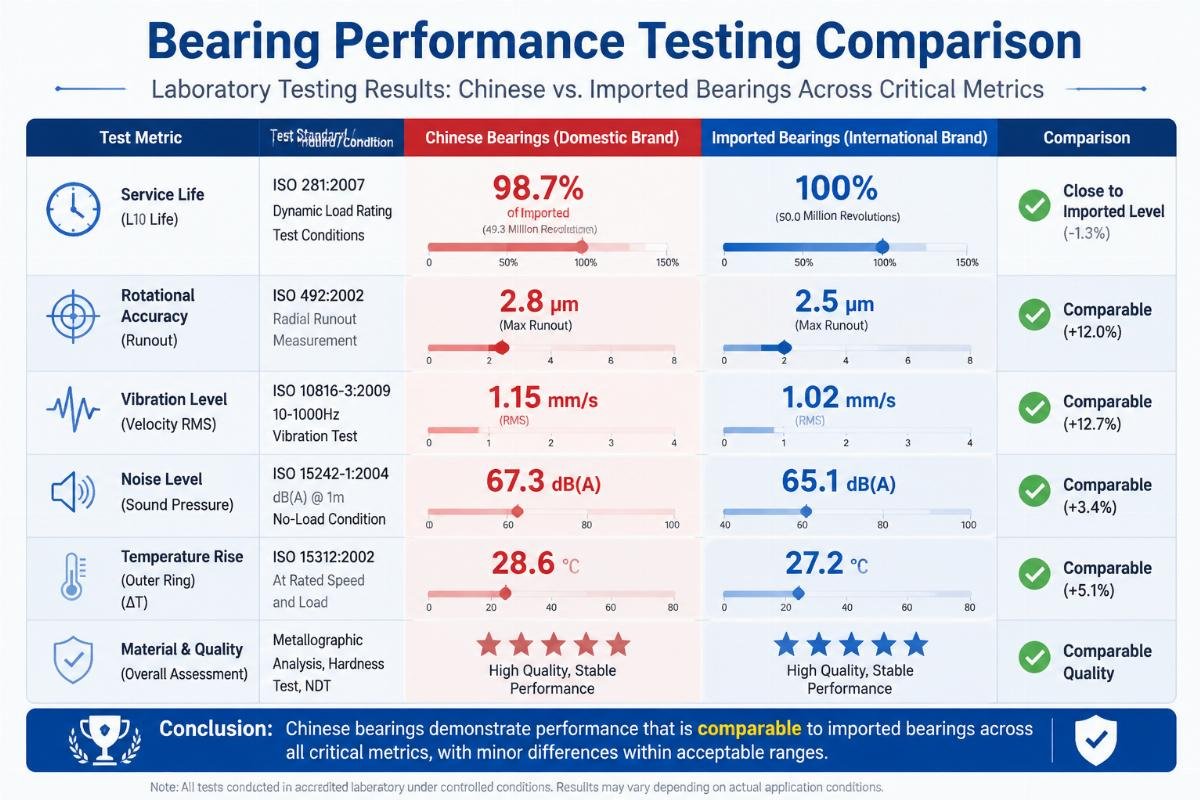
A origem da marca importa muito menos do que as características de desempenho específicas em aplicações de rolamentos industriais.NTN Os fatores mais críticos que determinam o desempenho e a longevidade dos rolamentos incluem a pureza do material, os processos de tratamento térmico, a precisão de fabricação e o suporte de engenharia de aplicação—áreas onde os principais fabricantes chineses agora competem diretamente com marcas importadas estabelecidas. A suposição ultrapassada de que "importado é igual a melhor" está sendo desmentida diariamente em laboratórios e instalações industriais em todo o mundo.NTN| Acabamento de Superfície |
Um fabricante europeu de turbinas eólicas fornece um estudo de caso convincente em paridade de qualidade. Eles precisavam reduzir custos para os rolamentos de redutor de 2,5 MW, mantendo os padrões de desempenho. Fornecemos rolamentos de rolos cilíndricos NTN com grau de precisão P5 e opções híbridas de cerâmica, completos com certificação IATF 16949 e certificação de material EN 10204 3.1. Através de um rigoroso processo de qualificação que incluiu 1.200 horas de testes de vida acelerados, nossos rolamentos de origem chinesa demonstraram desempenho dentro de 3% dos benchmarks especificados pelo OEM alemão. O resultado? Uma redução de 32% nos custos por unidade e o ciclo de qualificação reduzido para 4 meses em vez dos típicos 8-12 meses, sem comprometer a confiabilidade.
-
Certificação de MaterialNTN – Verifique a documentação EN 10204 3.1 para completa rastreabilidade desde a matéria-prima até o produto acabadoNTN
Medição de PrecisãoNTN – Insista em relatórios dimensionais completos com tolerâncias controladas dentro de ±5μm para aplicações críticasNTN
Verificação de Tratamento TérmicoNTN – Solicitar análise microestrutural confirmando a distribuição uniforme de dureza nos componentes do rolamentoNTN
Teste de Carga DinâmicaNTN – Solicite cálculos de vida L10 e L50 com base em parâmetros de aplicação reais, não em classificações genéricasNTN
Validação da Integridade do VedanteNTN – Garanta que os sistemas de vedação sejam testados para os contaminantes específicos em seu ambiente operacionalNTN
Como os rolamentos chineses oferecem 30-40% de redução no custo total de propriedade?
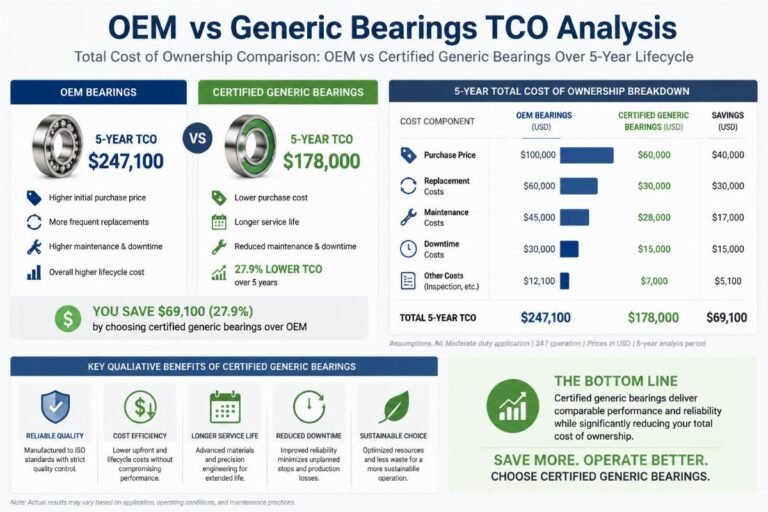
A análise do custo total de propriedade (TCO) revela que o verdadeiro valor dos rolamentos chineses vai muito além do preço de compra inicial.NTN Abordagens tradicionais de aquisição muitas vezes se concentram de forma restrita no custo inicial, perdendo as economias significativas disponíveis por meio da redução dos custos de manutenção de estoque, menor tempo de inatividade e agendamento de manutenção otimizado. Quando avaliados de forma abrangente, os rolamentos chineses consistentemente oferecem um TCO 30-40% mais baixo em comparação com alternativas importadas em aplicações comparáveis.NTN| Componente de Custo |
|---|
A
Leave a Reply