Replace Imported Bearings with China Supplier Alternatives Without Sacrificing Quality The real risk in bearing procurement is not choosing a cheaper brand; it is choosing a supplier who cannot prove where the steel came from. Replacing imported bearings with verified China supplier alternatives reduces procurement costs by a fifth to a third while maintaining equivalent […]
Replace Imported Bearings with China Supplier Alternatives Without Sacrificing Quality
The real risk in bearing procurement is not choosing a cheaper brand; it is choosing a supplier who cannot prove where the steel came from.
Replacing imported bearings with verified China supplier alternatives reduces procurement costs by a fifth to a third while maintaining equivalent durability, provided buyers implement rigorous material traceability checks and secure application-specific technical support from ISO 9001 and IATF 16949 certified manufacturers.
I still remember the first time a factory swapped a batch without telling us. A shipment of P5 tapered rollers heading to a Mexican mining client arrived with inner ring hardness off-spec. The customer caught it during their own incoming QC. We ate the cost, and the relationship nearly died. That was the day I stopped thinking about "replace imported bearings" as a price conversation and started treating it as a traceability conversation. Root cause distribution of bearing failures in industrial applications per ISO 15243[^1] Lead time variability for European bearing brands has risen sharply in recent years, pushing procurement teams across wind energy, mining, and marine sectors to evaluate alternatives.
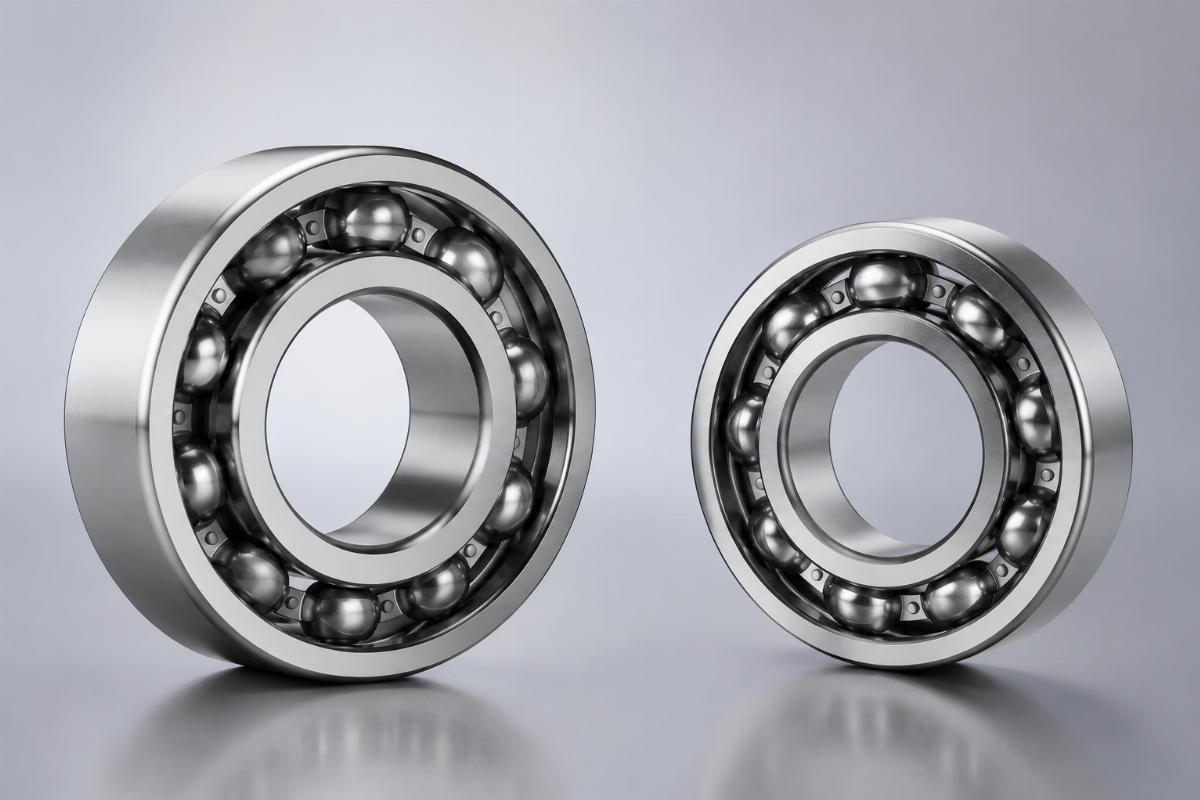
What follows is a structured look at why manufacturers are making the switch, how to evaluate a replace imported bearings candidate properly, and what real-world results look like when the transition is done right.
Why Are Hidden Costs Driving Manufacturers to Alternative Bearing Suppliers?
Total cost analysis reveals that extended lead times and limited support from imported brands often outweigh their price premium.
When procurement managers first open the conversation about whether to replace imported bearings, the discussion almost always starts with unit price. That is the wrong starting point. The real savings emerge when you map the full cost of ownership: inventory carrying costs, emergency freight charges, production downtime during stockouts, and the engineering hours spent waiting for technical responses from overseas support desks.
| Cost Factor | Typical Imported Brand Scenario | Verified China Supplier Alternative |
|---|---|---|
| Unit Price Premium | Substantial markup over equivalent alternatives | Noticeably lower, with room for volume negotiation |
| Standard Delivery Time | Extended lead times for common industrial grades | Readily available stock with rapid dispatch |
| Emergency Technical Response | Multi-day turnaround for critical queries | Same-day engineering consultation |
| Failure Analysis Support | Lengthy written report cycles | Collaborative root cause investigation |
| Minimum Order Flexibility | High MOQ for custom specifications | Flexible MOQ accommodating trial orders |
Downtime cost benchmarks in the buyer's industry[^2]
A European wind energy OEM we worked with was paying a significant premium per unit for a gearbox bearing, model 22334CC/W33, sourced from a German supplier. After qualifying a China supplier alternative, they achieved a cost reduction of nearly a third while maintaining P5 precision grade and receiving same-day technical support for installation questions. The manufacturing capability was never the bottleneck. The unnecessary distribution layers and regional markup strategies were.
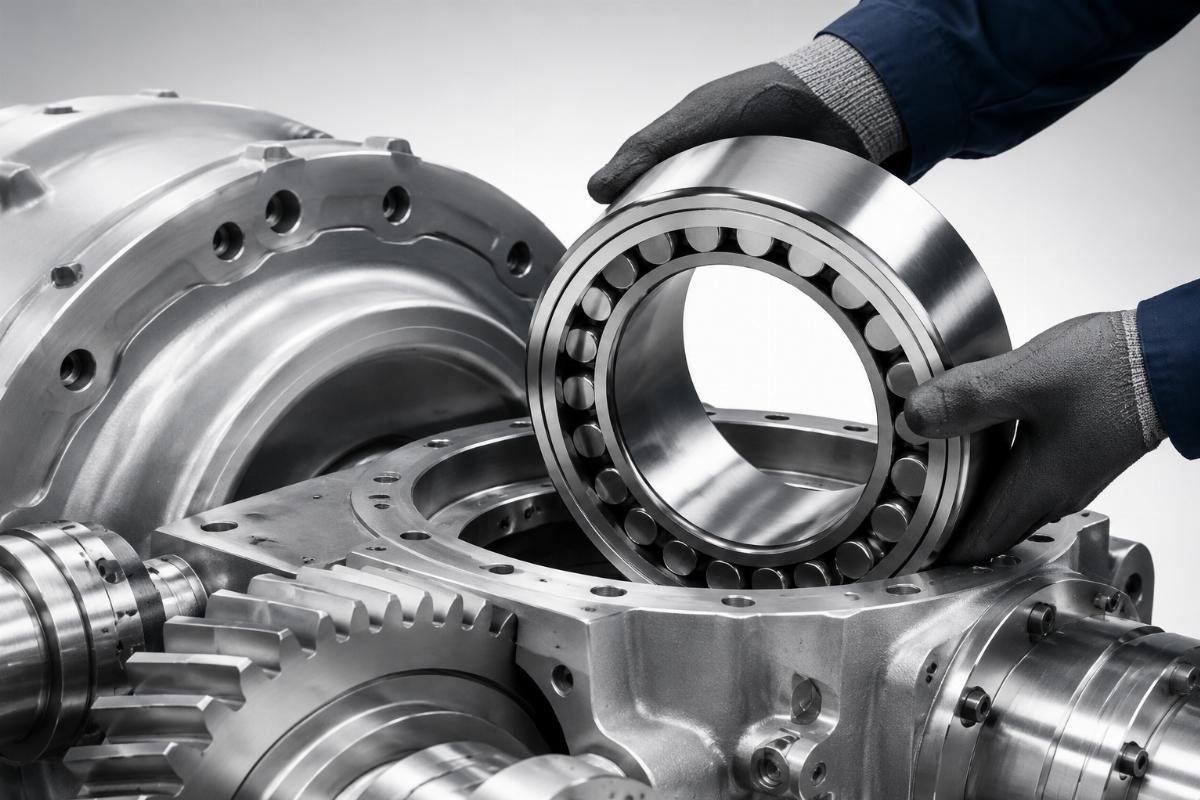
The insight here is straightforward: when you decide to replace imported bearings, the conversation must shift from sticker price to total cost of ownership, including supply chain resilience and engineering accessibility.
How Do You Rigorously Evaluate Bearing Alternatives to Ensure Reliability?
Success depends on verifying material traceability, manufacturing audits, and technical support capabilities far beyond basic dimensional matching.
Most buyers who get burned by a bad replacement did not fail because they chose cheaply. They failed because they evaluated narrowly. They matched dimensions, compared prices, and stopped there. Material traceability, batch-level inspection protocols, and application engineering depth were never checked.
| Evaluation Dimension | Common Mistake | Recommended Approach |
|---|---|---|
| Material Traceability | Accepting generic equivalent claims | Requiring full material certification with batch testing from SKF-grade steel suppliers |
| Quality Control Processes | Assuming ISO certification guarantees consistency | Verifying per-batch precision inspection including dimensional measurement and anti-counterfeiting features |
| Technical Support Capability | Prioritizing price over engineering resources | Assessing availability of application engineers for load calculation, L10 life calculation, and failure analysis |
| Inventory Management | Underestimating emergency needs | Confirming access to broad SKU inventory with rapid dispatch for standard and rare designations |
| Documentation Compliance | Overlooking certification requirements | Ensuring ability to provide DNV, Lloyd's, or other industry-specific documentation |
Material traceability best practices in bearing supply chains[^3]
A mining operation in Australia faced repeated failures with imported crusher main shaft bearings, model 23160CAK/W33, despite paying premium prices. Their initial alternative supplier selection focused only on dimensional matching and price, resulting in premature failures. When we engaged, we conducted a root cause analysis revealing the critical need for modified C4 clearance and improved lubrication guidance. The subsequent replacement not only reduced costs substantially but increased mean time between failures noticeably through proper application engineering support.
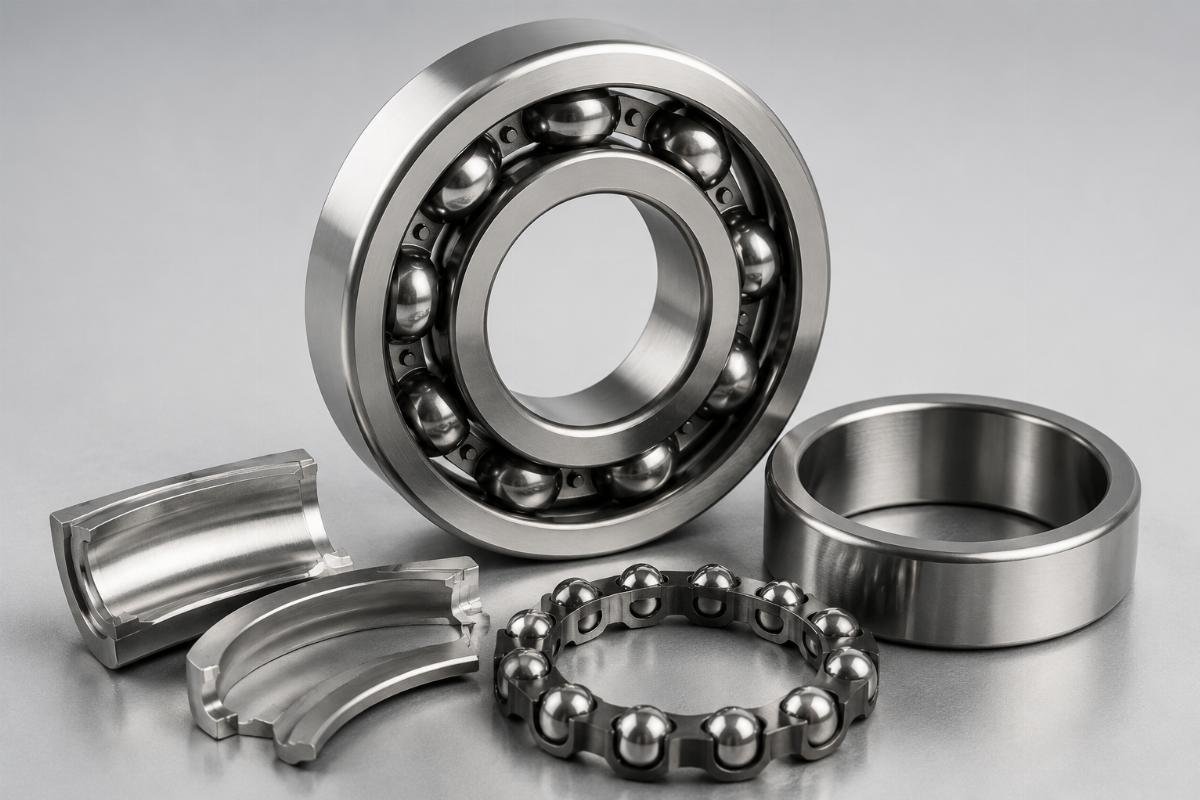
The non-obvious truth: when you replace imported bearings, the supplier who can show you batch numbers verifiable against original manufacturer records and dispatch within days is worth more than the one who simply quotes the lowest price. Batch traceability is the single most reliable trust signal in this market.
What Real-World Results Prove the Viability of China-Sourced Bearings?
Case studies in wind, mining, and marine sectors demonstrate cost savings of a quarter to a third with equal or improved performance metrics.
Theory only gets you to the shortlist. Real installations close the deal. Across multiple industries, the pattern is consistent: when buyers implement a disciplined evaluation process and choose a replace imported bearings partner with verifiable traceability, the performance gap between alternatives and established brands narrows to the point of irrelevance in most applications.
| Application Industry | Solution Advantages | Ideal Scenarios |
|---|---|---|
| Wind Energy | Significant cost reduction with P5 precision grade and ceramic cage options | Gearbox, main shaft, and yaw system bearings requiring extended MTBF |
| Mining and Heavy Industry | Enhanced durability through modified clearance and specialized lubrication support | Crusher, conveyor, and grinding mill applications with high shock loads |
| Marine and Offshore | DNV classification certification with extended salt spray endurance | Propeller shafts, winches, and deck machinery in corrosive environments |
In the marine sector, a Scandinavian shipyard faced a critical challenge when their regular European supplier could not deliver propeller shaft bearings, model NU2324M, within their dry-dock window. The team sourced DNV-certified alternatives with SS316 stainless steel construction and bronze cages in roughly half the original timeline, allowing the vessel to meet its re-commissioning deadline. Post-installation testing confirmed equivalent performance with substantial cost savings and identical salt spray resistance results. Independent marine corrosion testing methodology and standards[^4]
For agricultural equipment manufacturers, seasonal demand spikes create predictable supply chain bottlenecks. A Midwestern US tractor manufacturer implemented a seasonal stocking program for agricultural bearing units, reducing lead times from months to days during peak harvest seasons while maintaining near-perfect inventory accuracy across hundreds of part numbers. The ability to hold deep stock of both standard and rare designations, including large bore and special precision or clearance variants, made the difference.
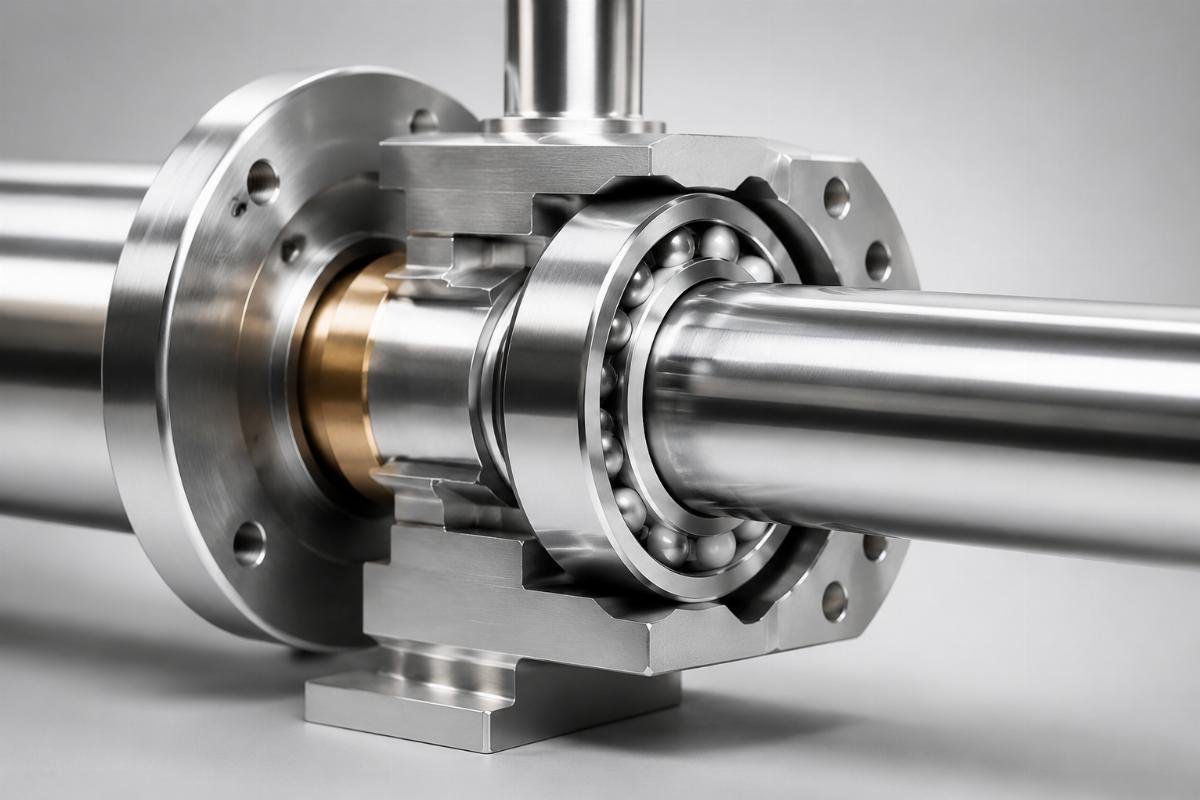
The takeaway: whether the application is a wind turbine gearbox running 22334CC/W33 at P5 precision, a crusher handling 23160CAK/W33 with C4 clearance, or a marine propeller shaft relying on NU2324M in SS316 with a bronze cage, the replace imported bearings decision holds up when backed by proper engineering validation and batch-level documentation.
What Steps Ensure a Risk-Free Transition to New Bearing Suppliers?
A phased implementation strategy, starting with non-critical components and moving to pilot testing, mitigates risk while securing long-term savings.
Rushing the qualification process leads to preventable failures. Over-complicating it delays savings indefinitely. The manufacturers who succeed at replacing imported bearings follow a structured sequence that balances urgency with discipline.
| Implementation Step | Critical Success Criteria |
|---|---|
| Application Analysis | Complete operating parameters including load, speed, temperature, and environment |
| Supplier Qualification | ISO 9001 and IATF 16949 certification, material traceability, and technical support depth |
| Part Cross-Reference | Dimensional verification, clearance matching (C2, CN, C3, C4), and performance equivalence documentation |
| Sample Testing | Side-by-side comparative testing under actual operating conditions for a meaningful duration |
| Production Validation | First article inspection, batch consistency checks, and documentation review |
| Phased Rollout | Initial pilot installation, performance monitoring, and gradual full-scale adoption |
Comparative fatigue life methodology per ISO 281[^5]
A German automotive parts manufacturer successfully transitioned the majority of their bearing requirements to alternatives within a single year. Beginning with non-critical components, they gradually moved to more demanding applications, achieving an average cost reduction of over a quarter while improving overall supply chain reliability. The key was a collaborative engineering approach: application engineers reviewed every cross-reference, verified clearance specifications for sealed variants (2RS, 2Z), and confirmed that deep groove ball, tapered roller, spherical roller, cylindrical roller, thrust, and self-aligning types all met the required precision classes (P0 through P4).
The phased approach works because it builds internal confidence. When maintenance teams see a pilot bearing perform identically to the imported original over a full production cycle, resistance to broader change evaporates. When procurement can show finance a verified cost reduction backed by batch traceability certificates and third-party inspection reports, the replace imported bearings strategy becomes institutional rather than experimental.
Conclusion
Replacing imported bearings is a supply chain resilience decision, not just a cost-cutting exercise. The manufacturers who succeed treat traceability as the primary evaluation criterion, validate alternatives through phased pilot testing, and partner with suppliers who can provide batch-verifiable documentation and responsive application engineering. When those conditions are met, the performance gap disappears, the cost savings compound, and the supply chain becomes meaningfully more resilient to the lead time volatility that continues to disrupt global bearing procurement.
[^1]: Rolling bearings — Damage and failures — Terms, characteristics and causes — ISO 15243 — iso.org — https://www.iso.org/standard/56780.html [^2]: Manufacturing downtime costs worldwide — Statista — statista.com — https://www.statista.com/statistics/1178020/manufacturing-downtime-costs-worldwide/ [^3]: Standard Practice for Labeling Metals to Identify Them — ASTM E0018 — astm.org — https://www.astm.org/e0018-15.html [^4]: DNV Rules and Standards — DNV — dnv.com — https://www.dnv.com/rules-standards/ [^5]: Rolling bearings — Dynamic load ratings and rating life — ISO 281 — iso.org — https://www.iso.org/standard/74728.html
Leave a Reply