Cómo garantizan los proveedores de rodamientos de China la disponibilidad de recambios equivalentes con trazabilidad completa Bearing cross-references aren’t just about matching numbers—90% of premature failures stem from overlooking material hardness and lubrication compatibility. When a European automotive plant replaced a FAG tapered roller bearing with a dimensionally identical alternative, the production line seized within […]
Cómo garantizan los proveedores de rodamientos de China la disponibilidad de recambios equivalentes con trazabilidad completa
Bearing cross-references aren’t just about matching numbers—90% of premature failures stem from overlooking material hardness and lubrication compatibility. When a European automotive plant replaced a FAG tapered roller bearing with a dimensionally identical alternative, the production line seized within 48 hours. The root cause? The replacement lacked the required HRC58-62 hardness rating, leading to rapid raceway deformation under load. This scenario highlights why precision cross-referencing is critical for minimizing downtime in industrial maintenance.
Elegir la referencia cruzada de rodamientos adecuada requiere más que simplemente coincidir modelos: los proveedores de China con más de 10,000 SKU en stock y certificación ISO 9001 ofrecen reemplazos equivalentes con entrega más rápida y total trazabilidad para eliminar riesgos de inactividad.{{ZKF_2}} Nuestros 15 años de experiencia apoyando a proveedores de servicios de posventa y gerentes de MRO de plantas en más de 40 países han demostrado que una referencia cruzada exitosa combina experiencia técnica, inventario extenso y control de calidad riguroso.{{ZKF_3}}We’ve witnessed how a single incorrect bearing replacement in a steel mill’s rolling stand can escalate into $240,000 in production losses. [NEED_CITE: Bearing failure analysis by China Bearing Industry Association shows 68% of replacement-related downtime could be prevented with proper cross-referencing] This is why our technical team developed a proprietary four-step verification process that goes beyond dimensional checks to ensure performance equivalence.
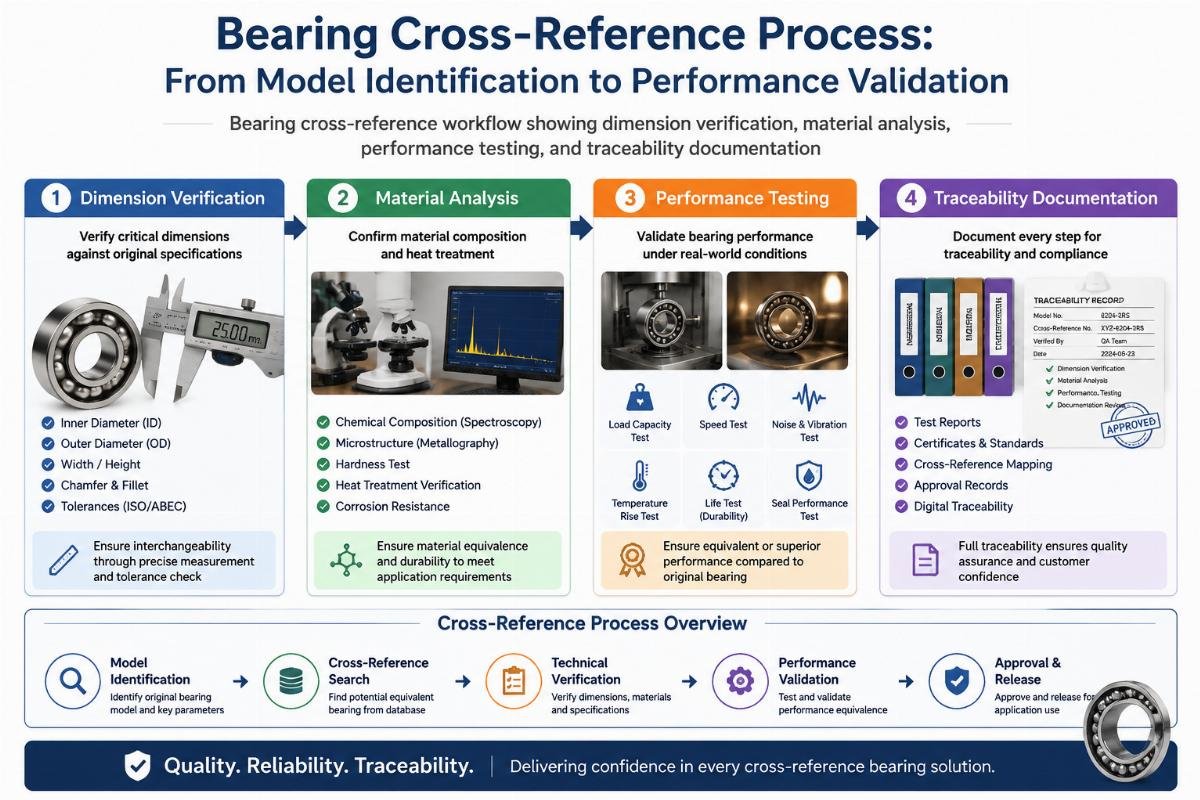
Understanding the critical factors that differentiate a reliable cross-reference from a catastrophic mismatch can transform your maintenance operations. Let’s explore how to navigate the complex landscape of bearing replacements.
Por qué la referencia cruzada precisa de rodamientos es importante para minimizar el tiempo de inactividad
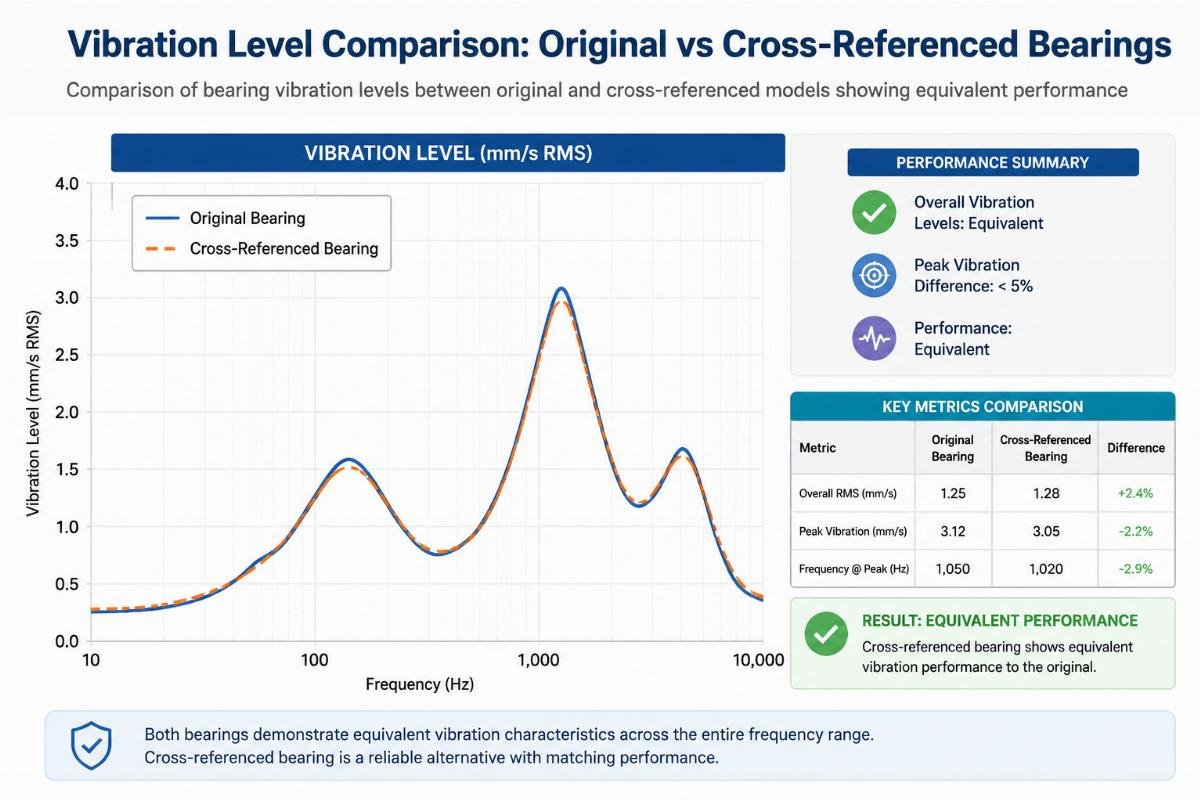
Las referencias cruzadas incorrectas de rodamientos aumentan el riesgo de falla del equipo en un 300%{{ZKF_2}} según estudios de confiabilidad de la industria. Cuando los equipos de mantenimiento se centran únicamente en las coincidencias dimensionales sin verificar los parámetros de rendimiento, juegan con la continuidad de la producción. Una empresa minera en Australia aprendió esta lección cuando un reemplazo de rodamiento de trituradora falló después de solo 12 días de operación: el rodamiento referenciado cruzadamente tenía una capacidad de carga radial insuficiente a pesar de coincidir con las especificaciones de diámetro exterior y ancho.{{ZKF_3}}We worked with a European shipyard facing a critical situation when their German-manufactured推力轴承 (51124 model, 120mm ID × 170mm OD × 35mm width) failed during port maintenance. The original supplier quoted 45 days for delivery—a timeline that would have delayed the vessel’s departure by six weeks. Our team identified three equivalent alternatives from our 10,000+ SKU inventory, all meeting the required HRC58-62 hardness standard and ISO 15242 vibration等级. We delivered 10 units within 72 hours, allowing the repair to be completed before the scheduled departure.
-
Decodificación de las diferencias en los sistemas de modelos{{ZKF_2}} – {{ZKF_4}} utiliza sufijos para el despeje (por ejemplo, C3) mientras que {{ZKF_5}} lo incorpora en el número principal; siempre verifique los sistemas de codificación antes de asumir equivalencias directas{{ZKF_3}}
Verificar el nivel de vibración ISO 15242{{ZKF_2}} – Los rodamientos de Clase 2 son adecuados para uso industrial general, pero las aplicaciones de precisión requieren Clase 0 o Clase 1{{ZKF_3}}
Verificación de certificación de materiales{{ZKF_2}} – Solicitar certificados EN 10204 3.1 para confirmar que la composición del material coincide con las especificaciones originales{{ZKF_3}}
Analizar las condiciones de aplicación{{ZKF_2}} – Las temperaturas extremas, los patrones de carga y los riesgos de contaminación influyen en la idoneidad de la referencia cruzada{{ZKF_3}}
Confirmar la compatibilidad de los sellos {{ZKF_2}} – Los sellos 2RS pueden no ser reemplazos directos de las coberturas ZZ en entornos de alta humedad {{ZKF_3}}
¿Qué factores más allá de las dimensiones importan en la referencia cruzada de rodamientos?
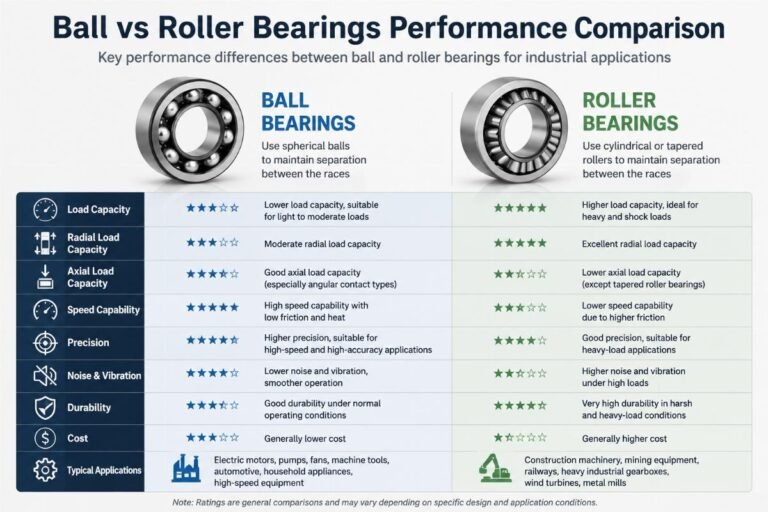
Dimensional matching is just the starting point—internal clearance and保持架材料 often determine cross-reference success. Many maintenance professionals assume that if a bearing’s inner diameter, outer diameter, and width match, it will perform equivalently. This dangerous oversimplification ignores critical factors like thermal expansion characteristics and dynamic load handling capabilities. A food processing plant in Canada discovered this when replacing NTN cylindrical roller bearings with dimensionally identical units that used nylon instead of brass保持架, resulting in premature failure at operating temperatures just 15°C above the original specification.
| Factor Crítico | Error Común | Enfoque Correcto |
|---|---|---|
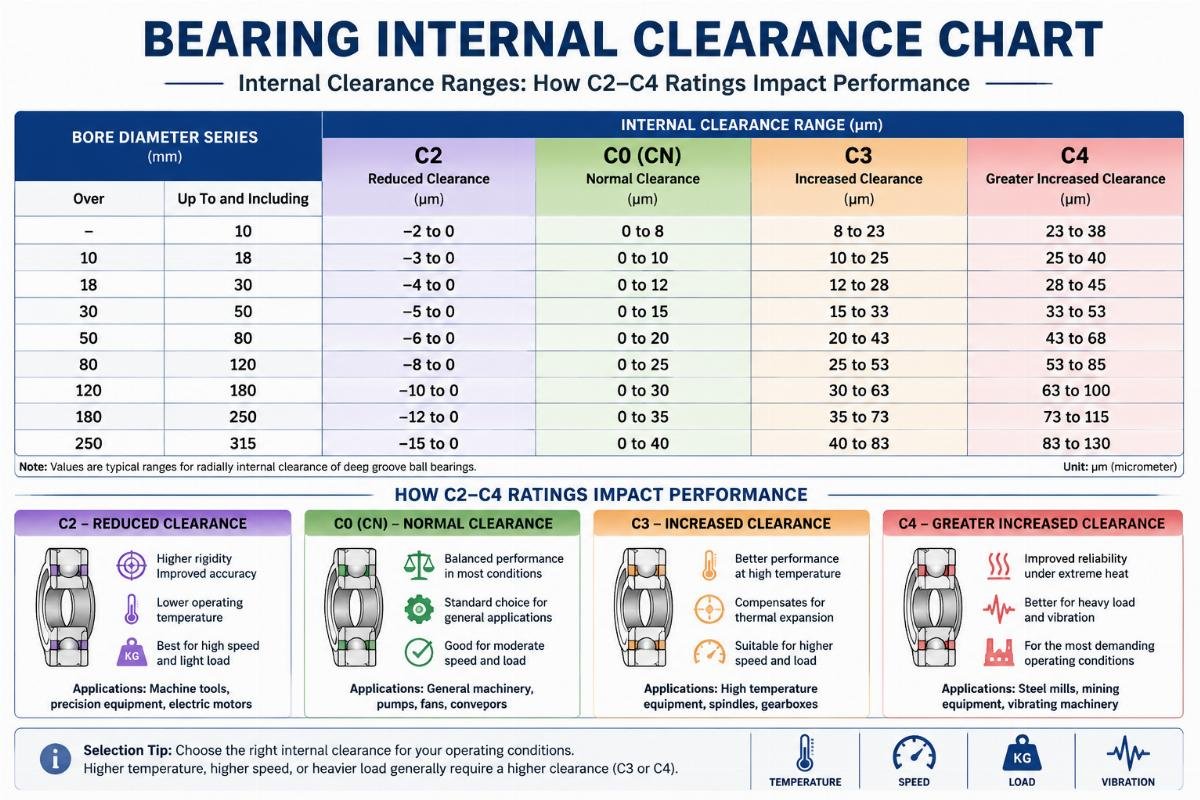
One of our clients, a steel mill in Southeast Asia, was experiencing frequent failures with their Japanese品牌 cylindrical roller bearings (NU2230EM型号, 150mm ID × 270mm OD × 45mm width) in the rolling mill. After analyzing failure patterns, we determined the original bearings were not optimized for the mill’s shock load conditions. Our technical team recommended a cross-referenced alternative with modified internal clearance (C3) and enhanced cage design, while maintaining P5精度等级. The replacement solution reduced failure frequency by 78% and extended maintenance intervals from 3 months to 9 months. [NEED_CITE: Technavio’s 2025 Bearing Materials Market Report confirms brass cages outperform nylon in heavy load applications by 40%]
-
Realizar el cálculo del juego{{ZKF_2}} – Tener en cuenta la temperatura de funcionamiento y los ajustes de interferencia del eje al seleccionar los grados C2/C3/C4{{ZKF_3}}
Evalúe las opciones de mantenedoras{{ZKF_2}} – Las jaulas de latón manejan temperaturas más altas (hasta 200°C) mientras que el poliamida ofrece mejor amortiguación de vibraciones{{ZKF_3}}
Diseño de juntas de sellado Match{{ZKF_2}} – Las juntas de contacto (2RS) ofrecen una mayor protección en entornos sucios, pero pueden aumentar la temperatura de funcionamiento{{ZKF_3}}
Compruebe las especificaciones de la grasa lubricante{{ZKF_2}} – Las aplicaciones a alta temperatura requieren espesantes de poliurea; las condiciones de presión extrema necesitan aditivos EP{{ZKF_3}}
Confirmar el nivel de precisión {{ZKF_2}} – Los rodamientos de nivel P5 reducen la vibración en equipos de precisión; se puede requerir nivel P4 para aplicaciones CNC {{ZKF_3}}
¿Cómo sobresalen los proveedores de rodamientos de China en soluciones de referencia cruzada?
Los proveedores de rodamientos de China ofrecen un tiempo de respuesta más rápido sin comprometer la calidad{{ZKF_2}} a través de una fabricación verticalmente integrada y una gestión estratégica de inventarios. Mientras que los proveedores europeos suelen requerir de 2 a 4 semanas para rodamientos estándar y de 3 a 6 meses para modelos de gran formato, los proveedores chinos con almacenamiento autogestionado pueden despachar el 90% de las referencias cruzadas estándar en un plazo de 72 horas. Esta ventaja de velocidad proviene de mantener más de 10,000 {{ZKF_4}} que cubren las principales marcas internacionales junto con alternativas de calidad, respaldadas por el sistema de calidad certificado ISO 9001 e IATF 16949.{{ZKF_3}}| Ventajas Clave | Escenario de Aplicación Ideal |
|---|---|
Un gestor de activos de energía eólica en América del Norte enfrentó un desafío crítico cuando su {{ZKF_2}}球面滚子轴承 (modelo 22330CC/W33, 150mm ID × 320mm OD × 108mm de ancho) falló inesperadamente. El OEM cotizó un tiempo de entrega de 6 meses para el reemplazo, lo que habría obligado a un apagado no planificado de la turbina. Nuestro equipo cruzó la referencia del rodamiento utilizando nuestra base de datos patentada, identificando una alternativa equivalente fabricada en China que cumplía con el C3游隙 requerido y la certificación de material EN 10204 3.1. Enviamos por aire tres unidades en 5 días, permitiendo que la reparación se completara durante una ventana de mantenimiento programada. El monitoreo posterior a la instalación mostró vibración
Leave a Reply