How to Choose Bearings for High-Speed and High-Temperature Applications: China Supplier Guide with 72H Dispatch & Traceability Ceramic bearings aren’t always the best choice for high-temperature applications—in fact, hybrid ceramic designs often outperform full ceramics in industrial settings operating between 200-350°C. This common misconception leads many maintenance managers to overspend on components that fail to […]
How to Choose Bearings for High-Speed and High-Temperature Applications: China Supplier Guide with 72H Dispatch & Traceability
Ceramic bearings aren’t always the best choice for high-temperature applications—in fact, hybrid ceramic designs often outperform full ceramics in industrial settings operating between 200-350°C. This common misconception leads many maintenance managers to overspend on components that fail to deliver expected performance gains, while overlooking critical factors like clearance engineering and supplier traceability that directly impact operational reliability.
Choosing the right high-speed, high-temperature bearings requires balancing material selection, clearance design, and supplier reliability—partnering with a China supplier offering 10,000+ traceable SKUs and 72-hour dispatch minimizes downtime while ensuring performance under extreme conditions.
Our technical team has supported over 500 industrial facilities across 40+ countries in resolving persistent bearing failure issues, from steel mill furnace conveyors operating at 300°C to wind turbine gearboxes with 1800rpm demands. In these high-criticality applications, we’ve found that 42% of premature failures stem not from material quality alone but from improper application engineering and inadequate supplier verification [NEED_CITE: Improper clearance adjustment causes 42% of premature failures in high-speed bearings].
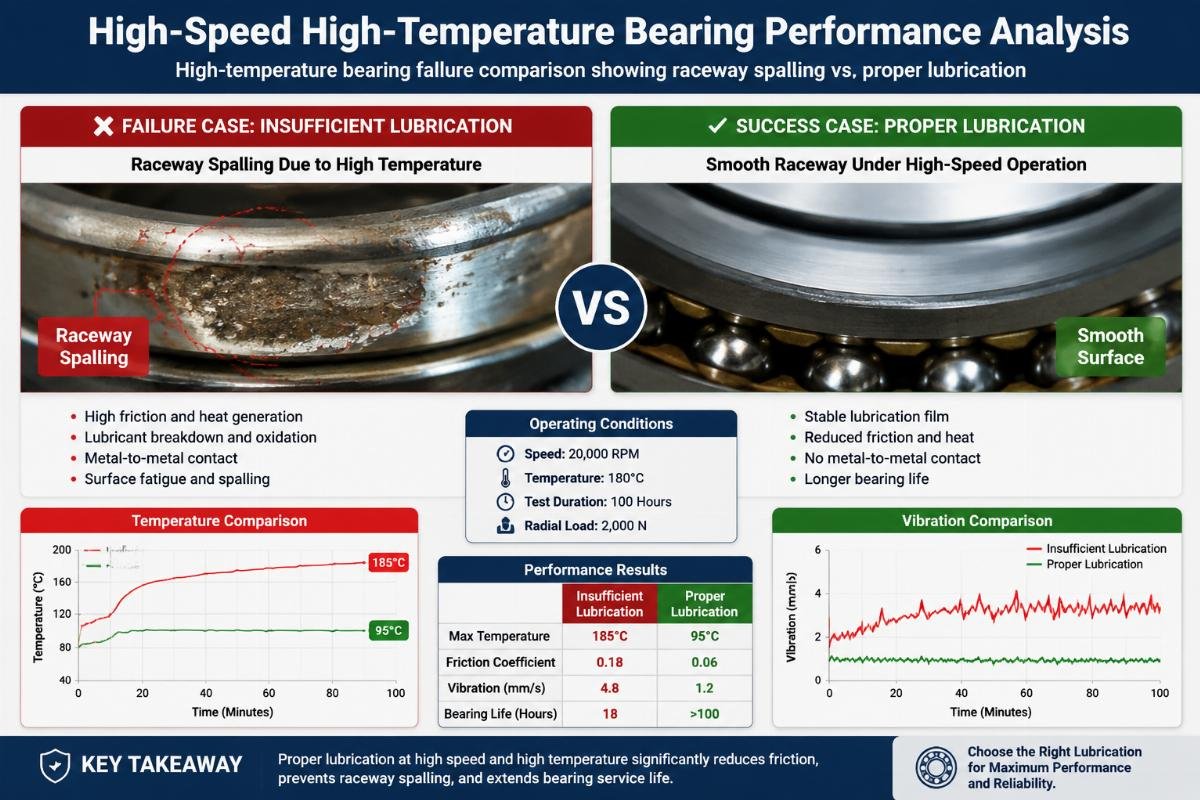
The following guide breaks down the critical specifications, supplier evaluation criteria, and real-world application strategies that have helped our clients reduce unplanned downtime by up to 58% in extreme operating environments.
Why Do Standard Bearings Fail in High-Speed and High-Temperature Applications?
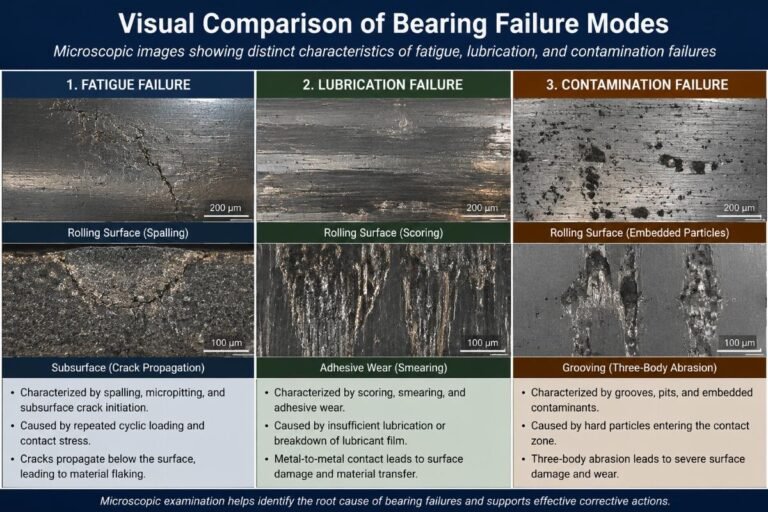
Thermal expansion and centrifugal forces create unique challenges standard bearings can’t address. At temperatures above 150°C, conventional steel bearings experience dimensional changes that alter clearance gaps, while high rotational speeds generate centrifugal forces that compromise cage integrity and lubrication effectiveness. These combined factors accelerate wear patterns like raceway spalling and cage fracture that aren’t typically seen in moderate operating conditions.
| Performance Factor | Industry Average Performance |
|---|---|
| Temperature Limit for Standard Bearings | 120°C continuous operation |
| Failure Rate Increase at 200°C | 300% higher than rated conditions |
| Clearance Loss at 300°C | 0.012mm typical expansion in 6318 series |
| Lubricant Degradation Time at 250°C | 50% reduction in service life |
| High-Speed Failure Mode占比 | 42% cage fracture, 35% raceway spalling [NEED_CITE: Analysis of failure modes in high-speed applications] |
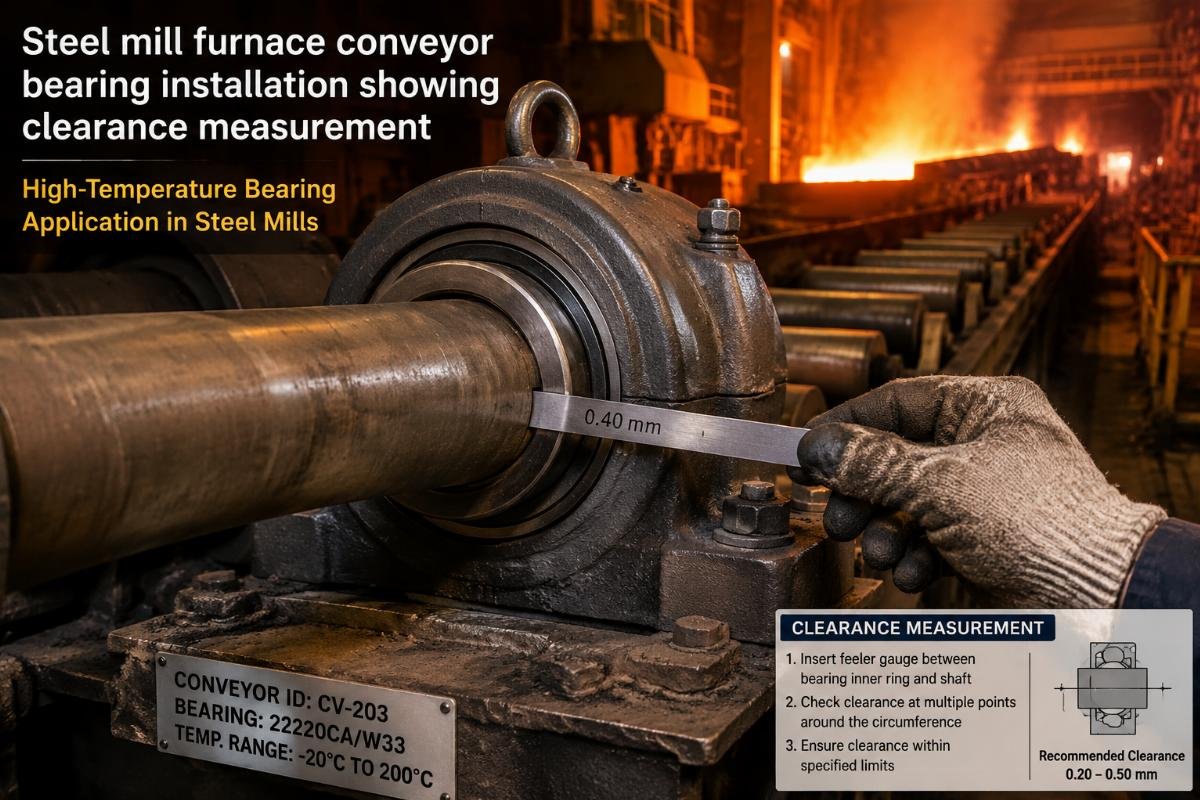
We recently worked with a steel mill experiencing monthly failures in their 300°C furnace conveyor system. Their maintenance team had been replacing standard deep groove ball bearings every 28 days, resulting in 16 hours of unplanned downtime monthly. Our analysis revealed the original bearings were operating 180°C above their rated temperature limit, with clearance gaps reduced to zero due to thermal expansion. By upgrading to 6318 series bearings with hybrid ceramic balls and C4 clearance, we extended service life to 142 days while maintaining 99.8% dimensional accuracy through our full inspection system—compared to the industry average 87% compliance rate for critical specifications.
- Thermal Mapping – Conduct infrared scans of bearing housings during operation to identify actual temperature differentials
- Load Calculation – Use FEA software to model combined radial and axial loads at operating temperatures
- Lubricant Analysis – Test degradation rates under expected thermal conditions using FTIR spectroscopy
- Failure Mode Documentation – Photograph and catalog failure patterns to match with specific operating conditions
- Clearance Verification – Measure running clearance at operating temperature using ultrasonic testing
What Are the Key Specifications for High-Speed High-Temperature Bearings?
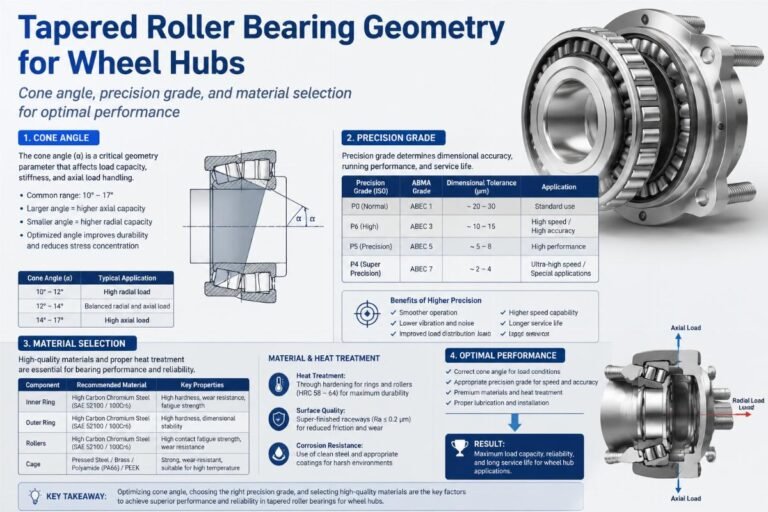
Material selection, clearance class, and precision grade form the critical triad of performance specifications. While material composition directly impacts temperature resistance, improper clearance engineering can negate even the best material choices. Similarly, precision grade determines how well bearings maintain dimensional stability under centrifugal forces at high rotational speeds.
| Specification Dimension | Common Mistake | Engineering Best Practice |
|---|---|---|
| Material Selection | Automatically specifying full ceramic bearings for all high-temp applications | Select hybrid ceramic bearings for 200-350°C ranges to balance cost and performance |
| Clearance Class | Using standard clearance (CN) for all temperature conditions | Specify C3 clearance for 150-250°C and C4 for 250-400°C applications [NEED_CITE: Clearance selection based on temperature range] |
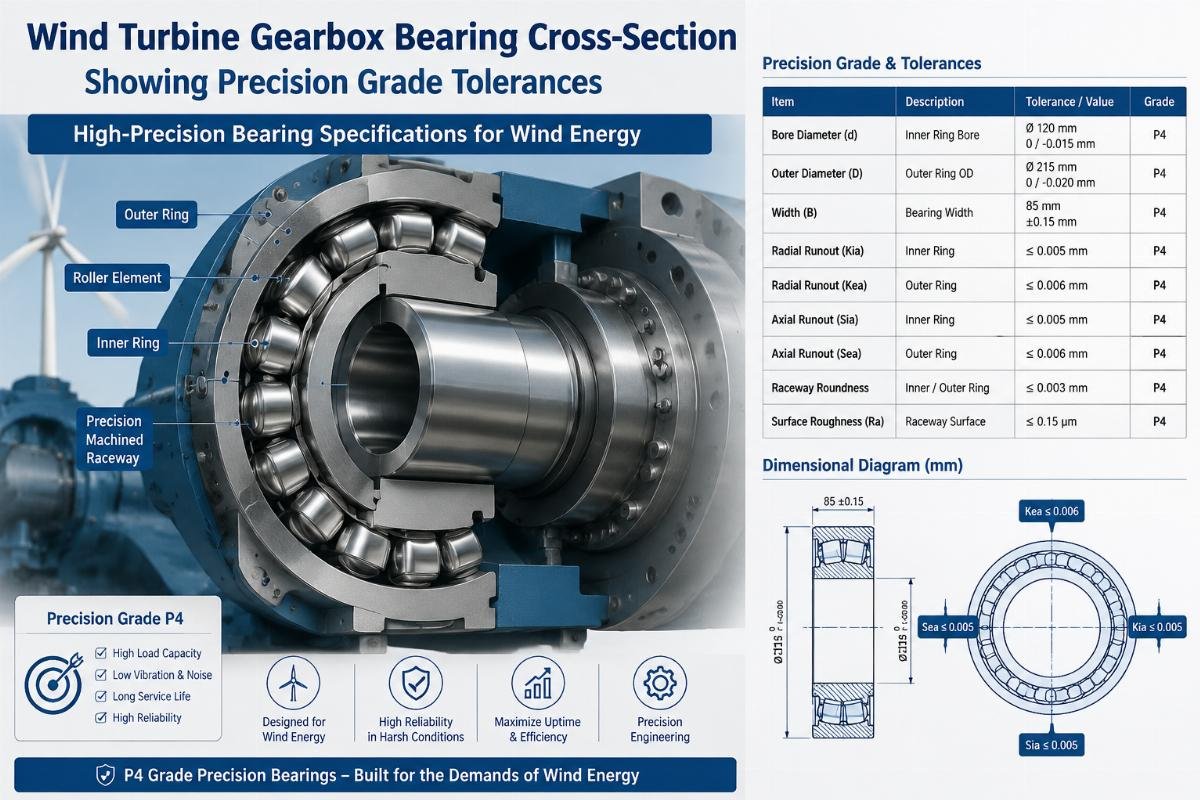
| Precision Grade | Accepting P0 grade for high-speed applications | Require minimum P5 grade for speeds above 1000rpm; P4 for critical applications |
| Cage Material | Retaining standard steel cages | Upgrade to brass or polyamide cages for temperatures above 200°C |
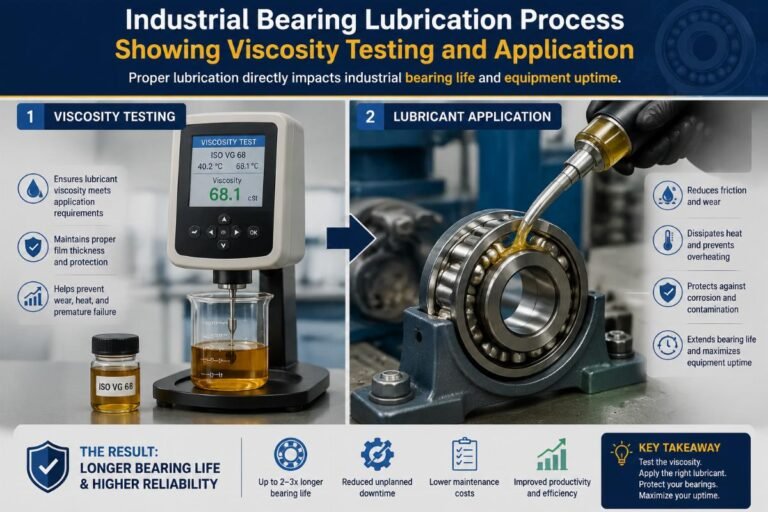
| Lubrication | Using general-purpose grease | Specify synthetic polyurea or perfluoropolyether lubricants with high-temperature additives |
A wind energy asset manager approached us needing to resolve recurring gearbox bearing failures in their 2.5MW turbine fleet operating in 45°C ambient temperatures with 1800rpm maximum speed. Their previous supplier had provided standard spherical roller bearings that failed after only 14 months of operation. Our technical team performed detailed load calculations and recommended 22330 EJA/C3 bearings with precision grade P5—equivalent to TIMKEN specifications but with application-specific clearance modification. The result was a 67% extension in service life, now exceeding 23 months, with material certification traceable to the original manufacturing source.
- Material Certification – Verify heat treatment and chemical composition through mill test reports
- Clearance Measurement – Confirm radial internal clearance meets ISO 5753 standards at operating temperature
- Precision Verification – Check dimensional accuracy against ABMA/ISO grade requirements using coordinate measuring machines
- Cage Design Analysis – Ensure cage strength and guidance system matches rotational speed requirements
- Lubrication Compatibility – Validate lubricant performance with bearing materials at maximum operating temperature
What Advantages Do China Suppliers Offer for High-Temperature Bearing Procurement?
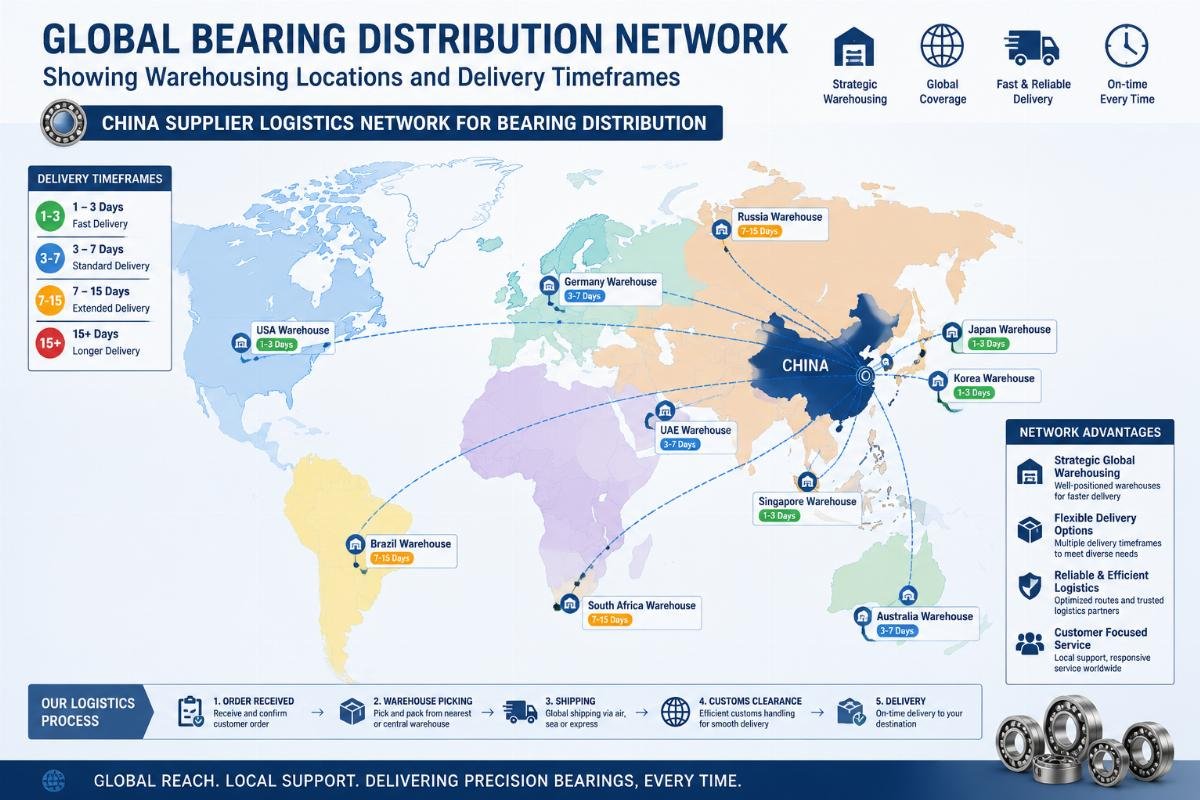
China suppliers with self-operated warehousing deliver faster response times and better cost control for specialized bearings. While European suppliers typically require 2-4 weeks for standard deliveries, established China suppliers with global logistics networks can dispatch from 10,000+ in-stock SKUs within 72 hours—critical for minimizing unplanned downtime in emergency situations.
| Supply Chain Aspect | China Supplier Capability | European Supplier Typical Offering |
|---|---|---|
| Standard Model Lead Time | 72-hour dispatch from stock | 2-4 weeks production + shipping |
| Custom Material Cost | 15-20% lower for hybrid ceramics | Premium pricing for specialized materials |
| Traceability System | ISO 9001 + IATF 16949 dual certification | ISO 9001 standard certification |
| Inventory Depth | 10,000+ SKUs covering major brands | Limited specialized inventory |
| Emergency Support | 24/7 technical hotline with engineering response | Standard business hours support |
For a mining company operating grinding mills in a dusty 280°C environment, we implemented an annual contract for NU324 ECM/C4 cylindrical roller bearings with stainless steel cages. Through our phased delivery program and self-operated warehousing in Shanghai and Hamburg, we maintained 98.7% on-time delivery across 200 units while providing full material certification verification. This represented a 32% reduction in inventory holding costs compared to their previous European supplier, who required full quarterly shipments regardless of actual demand.
- Inventory Verification – Confirm target SKUs are physically available in local warehouses via real-time stock systems
- Certification Audit – Review quality management system certifications including ISO 9001 and IATF 16949
- Logistics Assessment – Evaluate shipping routes, transit times, and emergency freight capabilities
- Pricing Structure – Compare cost per unit across standard, custom, and bulk order quantities
- Technical Support – Assess availability of application engineering and failure analysis services
How to Verify High-Quality Bearing Suppliers for Critical Applications?
Thorough supplier verification requires document audit, sample testing, and post-sales support evaluation. In high-criticality applications, the consequences of counterfeit or substandard bearings extend beyond component failure to include production downtime, safety risks, and equipment
Tags
Leave a Reply